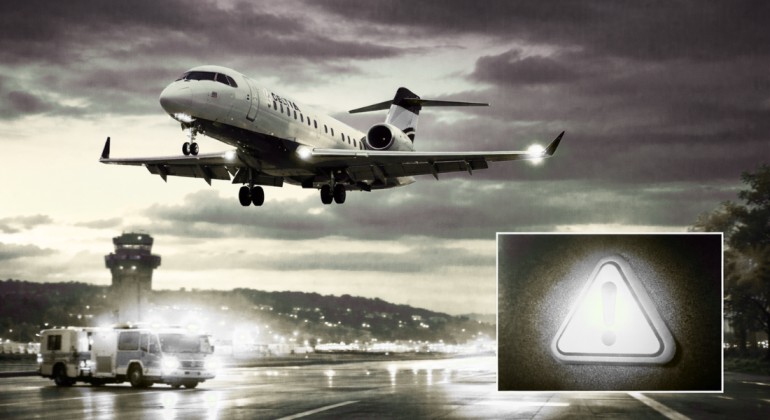
Delta Connection Flight DL3543 made a precautionary emergency landing after the flight crew identified an operational concern during the journey, according to airline officials. The aircraft landed safely at an alternate airport, and no injuries were reported among passengers or crew.
The incident drew attention online as travelers searched for details about the Delta Connection flight DL3543 emergency landing, a reminder of how quickly aviation terminology can trigger public concern. While the word “emergency” often suggests danger, aviation experts say such landings are frequently part of routine safety decision-making rather than a response to an imminent threat.
Airline officials emphasized that the decision to divert was deliberate and made early, in accordance with established safety protocols.
Flight Details: What Is Confirmed So Far
As of now, only limited operational details about the Delta Connection DL3543 emergency landing have been publicly confirmed. Airlines and aviation authorities typically release technical specifics after internal reviews, which can take time.
Confirmed Information
- Flight number: Delta Connection DL3543
- Operating brand: Delta Connection (regional service for Delta Air Lines)
- Incident type: Precautionary emergency landing
- Outcome: Aircraft landed safely; no injuries reported
Information Not Publicly Disclosed Yet
At the time of reporting, the following details have not been officially released by the airline or regulators:
- Exact number of passengers on board
- Departure airport (origin)
- Scheduled arrival airport (destination)
- The airport where the aircraft diverted and landed
- Exact date and local time of the emergency declaration
Airlines often withhold these details initially to allow maintenance inspections and internal reviews to conclude before releasing full operational data.
What Occurred During the Flight
Flight DL3543, operating under the Delta Connection banner, was en route when flight deck instruments indicated a condition that warranted further evaluation. Rather than continuing to the scheduled destination, the pilots chose to divert to a nearby airport where the aircraft could be assessed on the ground.
According to information released by the airline:
- The aircraft landed normally
- Airport emergency crews were positioned as a precaution
- Passengers deplaned without incident
- No medical emergencies were reported
Such diversions are common when flight crews encounter alerts that cannot be conclusively resolved while airborne. Aviation procedures prioritize eliminating uncertainty as early as possible.
Why Pilots Choose to Declare an Emergency
In commercial aviation, declaring an emergency is not an admission of failure. It is a procedural tool that gives pilots flexibility and priority.
An emergency declaration allows:
- Faster clearance to land
- Immediate access to emergency services
- Reduced workload in congested airspace
Pilots may take this step for a wide range of reasons, including mechanical alerts, cabin air irregularities, sensor warnings, or onboard medical situations. Importantly, many of these alerts are precautionary and do not indicate an actual system failure.
Under Federal Aviation Administration guidance, pilots are trained to avoid prolonged troubleshooting in flight when a safer option, such as landing, is available.
How Common Are Emergency Landings?
Emergency landings occur far more often than most travelers realize and rarely result in serious outcomes.
Industry data and aviation safety reporting show that:
- Thousands of flights are diverted each year globally
- The majority land without incident
- Post-landing inspections often reveal minor issues or false alerts
Aviation safety analysts consistently note that these decisions reflect a conservative operational culture. Aircraft systems are designed to err on the side of caution, flagging even small irregularities so they can be reviewed on the ground.
In that context, an emergency landing is often evidence of safety systems working as intended.
What Passengers Typically Experience
For passengers, an unscheduled landing can be stressful, especially when limited real-time information is available. On DL3543, passengers were informed by the flight crew as the situation developed, according to accounts shared after landing.
Following a diversion, airlines typically follow a standard sequence:
- The aircraft is inspected by maintenance teams
- Passengers remain onboard or deplane depending on circumstances
- Airline staff assist with rebooking
- Meals or accommodations may be offered if delays extend
Airlines aim to balance safety requirements with minimizing disruption, though delays are often unavoidable when an aircraft is taken out of service for inspection.
Delta Connection and Safety Oversight
Delta Connection flights are operated by regional carriers under agreements with Delta Air Lines. While these flights may use smaller aircraft, they are governed by the same federal regulations as mainline operations.
Safety oversight includes:
- FAA-approved pilot training programs
- Routine maintenance inspections
- Continuous regulatory monitoring
From a regulatory standpoint, there is no distinction in safety expectations between regional and mainline flights.
What the DL3543 Landing Tells Us About Aviation Safety
The DL3543 incident illustrates a central principle of modern aviation: uncertainty is treated as a risk that should be removed as early as possible.
Pilots are not encouraged to “push through” ambiguous situations. Instead, they are trained to make conservative decisions that favor landing and evaluation on the ground. While this approach can lead to delays, it significantly reduces risk exposure.
For passengers, the experience may feel disruptive or unsettling. But from an operational standpoint, it reflects a system designed to prioritize safety over schedule.
FAQ’s
What happened during the Delta Connection DL3543 emergency landing?
Delta Connection Flight DL3543 diverted and landed safely after pilots identified a potential operational concern. The decision was made as a precaution, and no injuries were reported.
Why did Delta Connection DL3543 divert instead of continuing the flight?
Pilots are trained to land early when an alert creates uncertainty. Diverting allows the aircraft to be inspected on the ground, which is safer than continuing the flight.
Was the Delta Connection DL3543 emergency landing dangerous?
No evidence suggests the landing was dangerous. Emergency landings are often precautionary and are part of standard aviation safety procedures.
How common are emergency landings like DL3543?
They are more common than most passengers realize. Airlines divert thousands of flights globally each year, and most land without incident or injury.
What does “emergency landing” mean in aviation terms?
In aviation, an emergency landing means pilots request priority handling to reduce risk. It does not automatically mean the aircraft was in immediate danger.
Are Delta Connection flights held to the same safety standards as Delta flights?
Yes. Delta Connection flights operate under the same federal safety regulations, pilot training requirements, and maintenance oversight as mainline Delta flights.
What happens to a plane after an emergency landing?
The aircraft is inspected by maintenance teams and does not return to service until all checks are completed and approved.
Should passengers be concerned after hearing about DL3543?
Not necessarily. These events often show that safety systems are working properly by addressing issues early.
Conclusion
The delta connection dl3543 emergency landing was a precautionary diversion carried out in accordance with standard aviation safety practices. The aircraft landed safely, passengers were unharmed, and the situation was managed without incident.
In commercial aviation, emergency declarations are not signs of crisis. They are tools that enable flight crews to act decisively, reduce uncertainty, and maintain safety margins.
For travelers, these events serve as a reminder that delays often occur not because something has gone wrong, but because safeguards are doing exactly what they are designed to do.